West Coast Private Game Reserve: Where the sea meets the bush

Where the untamed West Coast meets modern comfort, the West Coast Private Game Reserve invites guests to experience wildlife in one of South Africa’s most unexpected settings. From intimate game drives to beautifully designed cabins, every moment is rooted in nature close to Yzerfontein, writes Marzahn Botha.
The older I get, the more I treasure unhurried moments with my mum in beautiful places.
There is something deeply restorative about sharing time together in nature, with nothing more pressing to do than watch wildlife, take in the landscape and enjoy each other’s company.
Having lived in Jacobsbaai myself, I have always been drawn to the West Coast. I love its earthy ruggedness, its vast open spaces and the quiet authenticity of its people. It is a place that never tries to be anything other than itself.
The fynbos, salty air, endless horizons and understated beauty all have a way of slowing you down. Yet there is something even more special about seeing wild animals roaming freely across this landscape, so close to the Atlantic Ocean.
It feels almost timeless, as though you have stepped back into an era before fences and roads divided the land, and before pioneers arrived with rifles. Watching antelope grazing against a backdrop of dunes and ocean offers a glimpse of what this coastline may once have looked like in its wildest form.
Our recent visit to the West Coast Private Game Reserve, just five kilometres outside Yzerfontein, offered exactly that kind of experience.
The reserve combines authentic game viewing with beautifully designed contemporary accommodation that blends almost effortlessly into the surrounding landscape. We stayed in Caracal, one of two Salt Mine Cabins forming part of the Rooikat Safari Collection. The second cabin is called Porcupine.


Our stay felt both luxurious and deeply connected to nature. It offered a rare opportunity to experience the untamed spirit of the West Coast without sacrificing comfort, and it was something I particularly wanted to share with my mum.
The reserve recently featured on BBC Lifestyle Africa’s documentary series Hidden Gems South Africa, a programme on DSTV BBC Lifestyle Channel 174 dedicated to uncovering some of South Africa’s most memorable and unusual places to stay. Sponsored by LekkeSlaap and Toyota South Africa, the series highlights destinations that may not yet be widely known but offer experiences worth travelling for.
As part of the production, travel content creator Tobogo Pinpin and his wife visited the West Coast Private Game Reserve to experience its particular blend of wilderness, wildlife and modern comfort.
Its inclusion in the series speaks to the reserve’s growing reputation as a destination where contemporary luxury meets the raw beauty of the West Coast. It is also attracting travel influencers, photographers and filmmakers drawn to its abundant wildlife, distinctive accommodation, dramatic landscapes and cinematic night skies.
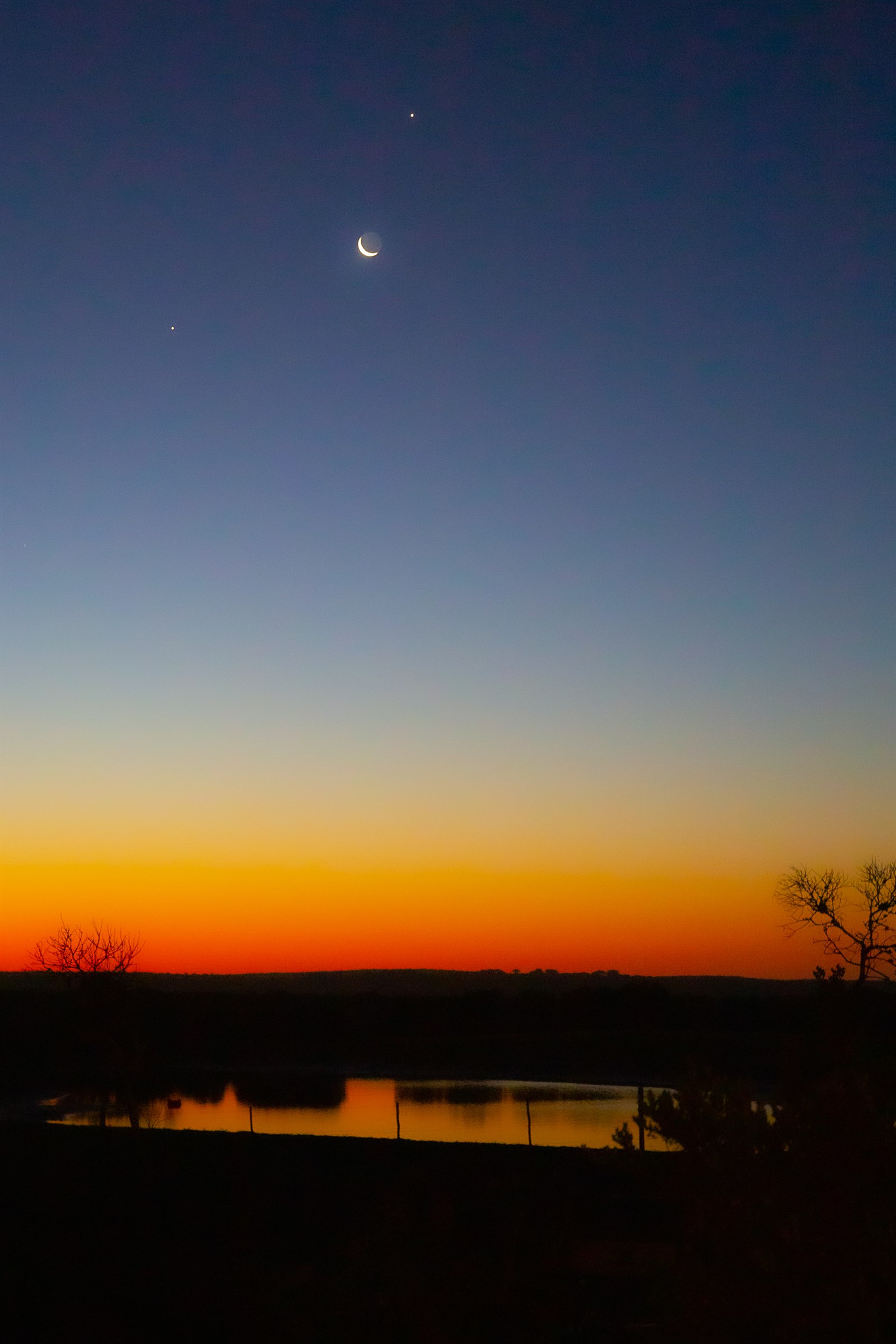
It is one of those stargazing evenings that remains most vividly imprinted in my memory.
Our small group of three was fortunate enough to witness a brilliant fireball, or meteor, streaking across the night sky. It blazed through the Earth’s atmosphere for several unforgettable seconds before burning out, leaving us standing in silence beneath the stars.
There are moments that require no words. You simply stand still, watch and understand how small you are beneath such an immense sky.

A landscape restored
The story of the 1 700-hectare West Coast Private Game Reserve begins with the joining of two neighbouring farms, Kerriefontein and Blombosch. Kerriefontein had previously been used for cattle grazing before a devastating wildfire swept through the property and destroyed much of its vegetation. Nature, however, proved remarkably resilient. Over time, the fynbos and grasslands recovered. As the landscape restored itself, the new owners began reintroducing wildlife and transforming the land into the flourishing reserve it is today. Blombosch, the neighbouring property owned by Jared Jager, had already been operated as a private wildlife property for several years. It was home to a healthy population of game, including giraffe, zebra, eland, waterbuck and numerous ostriches. Since the two properties were combined, the wildlife offering has expanded through the introduction of blue wildebeest, red hartebeest, buffalo and springbok. Indigenous species such as steenbok and common duiker have always occurred naturally in the area, adding to the reserve’s biodiversity.
According to co-owner Sarah Tjeenk Willink, who comes from Jersey in the Channel Islands, the reserve is very much a friends-and-family-run venture. Sarah and the Voges family each play an active role in its development and daily operation. Bradley Voges oversees the business strategy and continued development of the reserve, while his wife, Maria, manages its finances. Sarah is responsible for bookings, marketing, guest relations and day-to-day operations.
Sarah and her Dutch husband, Cai, met while attending a safari guide course in October 2006. Cai now works full-time for Asilia Africa, a company with camps in Tanzania and Kenya, and is currently involved in the development of a lodge in Uganda. The family’s combined experience and complementary strengths have helped create a seamless experience for visitors.
Magda Bester is a qualified guide who manages the farm, while André Vaalbooi was the reserve’s first bush guide and also worked at the nearby !Khwa ttu San Heritage Centre. One of the highlights of our visit was spending time with Daniel Taylor, a game ranger and intern from Vredenburg. His infectious enthusiasm, deep appreciation for wildlife and eagerness to share his knowledge brought the landscape to life.
“The reserve has grown remarkably in a short space of time. Game drives were launched in November 2024 with a single safari vehicle. Less than two years later, the reserve operates two game-viewing vehicles, with a third on standby to meet growing demand,” says Sarah. Despite that growth, the team remains committed to protecting the intimate nature of the experience.
“We wanted to keep the safari experience personal,” she explains. “Each vehicle accommodates only nine guests, creating a far more intimate and engaging game drive than the larger safari vehicles often found elsewhere.” The reserve’s accommodation is an even more recent addition. The first guests checked into the Salt Mine Cabins in August 2025, meaning the property still has the exciting freshness of a destination at the beginning of its story.
An intimate West Coast safari
Daniel, who is completing a three-year Diploma in Nature Management at Newbridge Graduate Institute in Tygervalley, welcomed the three of us aboard one of the reserve’s open safari vehicles.
The air was crisp and the winter sky brilliantly clear. On the horizon, wind turbines turned slowly along the hillsides, a familiar West Coast landmark contrasting with the seemingly timeless wilderness unfolding around us.
“The reserve stretches from the R27 to within about 3 km of the Atlantic Ocean, and from the R315 all the way to the West Coast National Park,” Daniel explains. “It’s an incredibly diverse landscape.” Within minutes, we began encountering wildlife.
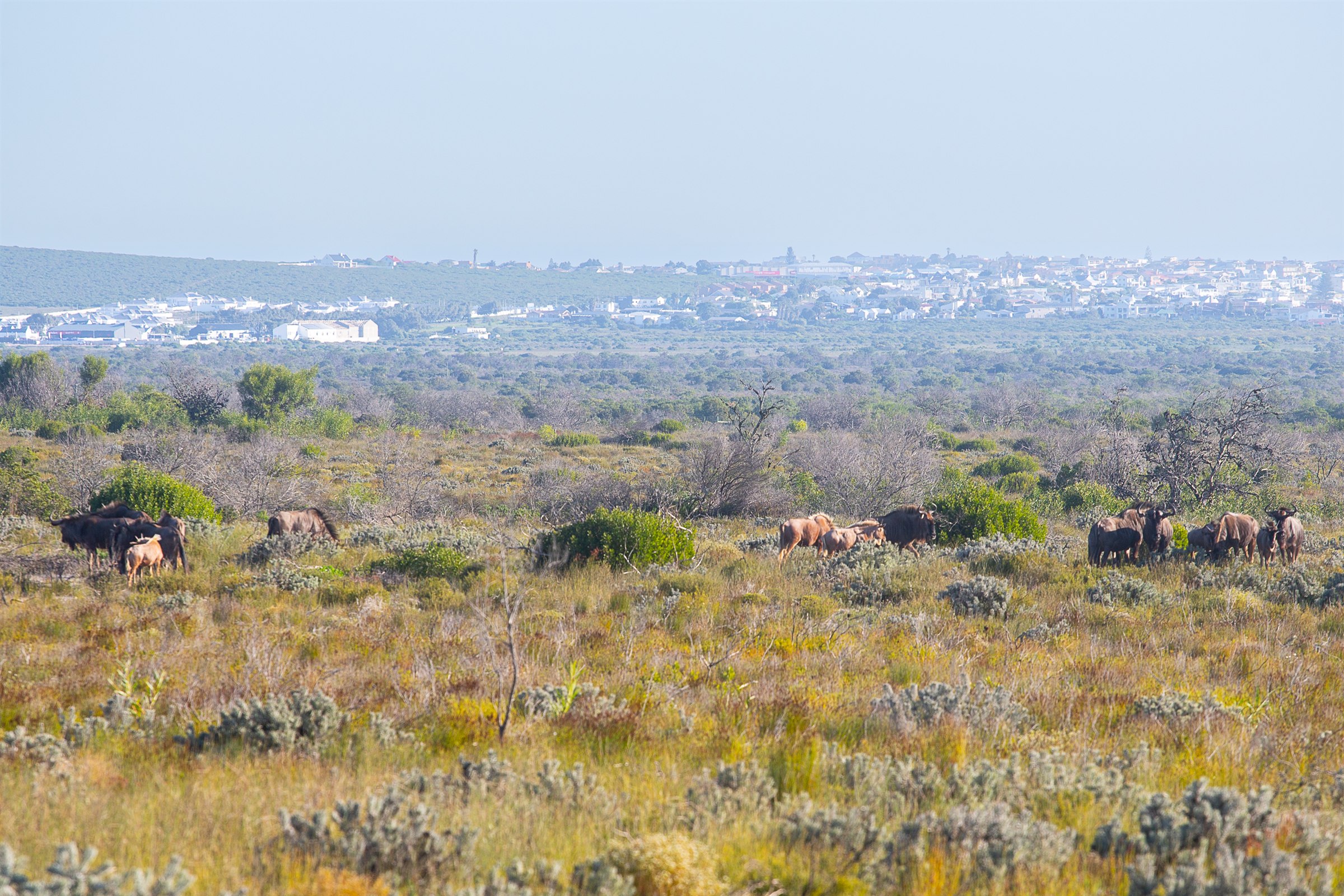
Giraffe moved across the plains with their characteristic unhurried grace. Nearby were zebras, eland, blue wildebeest, springbok, waterbuck, red hartebeest and ostriches. We also spotted smaller indigenous residents, including steenbok and duiker.
The only animals that eluded us that afternoon were the reserve’s buffalo.
Yet a game drive here is about far more than ticking animals off a list. One of the most memorable moments came when we stopped beside a tranquil gypsum salt pan for freshly brewed coffee, rooibos and homemade rusks as the winter sun began dipping towards the horizon. The salt pans are a visually striking part of the landscape, but they also serve an important ecological purpose. During the wetter months, they become seasonal wetlands that attract a remarkable variety of birdlife.
Daniel pointed out that the pans can be deceptive. Although their surfaces may appear dry, the clay-rich ground can quickly trap unsuspecting vehicles after rain. As we drank our rooibos and watched the light soften across the landscape, Daniel shared one of the reserve’s more light-hearted traditions.
Several of its animals have been named after Springbok rugby legends.
“Our golden wildebeest immediately reminded me of Faf de Klerk with his flowing blond mane,” Daniel laughs. “Then there’s Bismarck du Plessis, our dominant buffalo, RG Snyman, one of the eland bulls, and Eben Etzebeth, one of our tallest giraffes.” The reserve is also home to a growing herd of golden wildebeest.
“At the moment we have eight or nine blue wildebeest calves and four or five golden wildebeest calves,” he says proudly.
My mum, Zetta, was equally impressed by Daniel’s knowledge and enthusiasm.
“Daniel really knows his story,” she says. “The game drive offers so much more than just wildlife. There are vast open spaces, magnificent views towards Yzerfontein, beautiful fynbos, birds and a wonderful variety of animals. It feels as though you’re hundreds of kilometres away from the city.” She was right.
One of the reserve’s greatest strengths is its biodiversity. The landscape moves through three distinct West Coast vegetation types: Langebaan Dune Strandveld, Saldanha Flats Strandveld and Hopefield Sand Fynbos. Two of these are listed as threatened ecosystems.
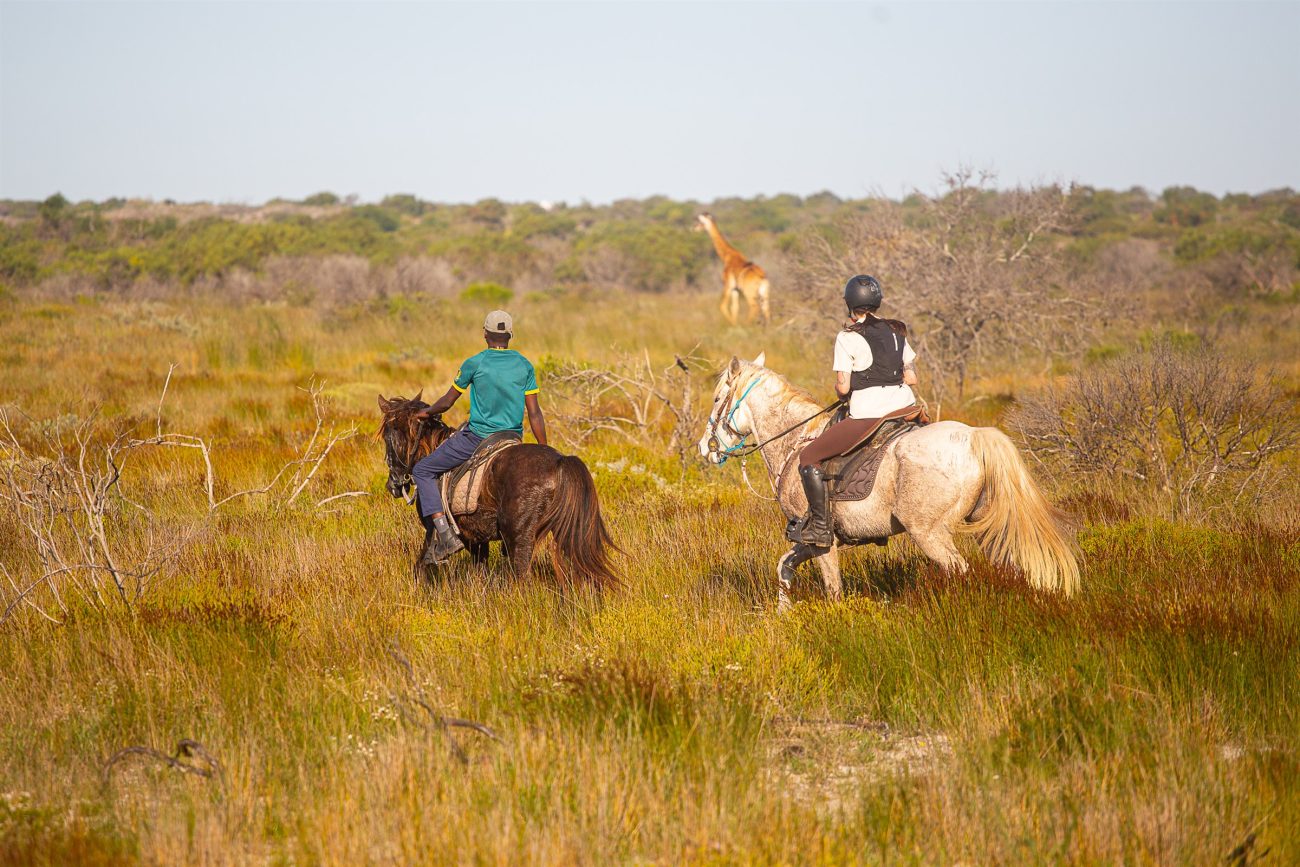
During late winter and spring, the reserve transforms again as wildflowers begin to bloom. Proteas, pincushions and numerous indigenous species turn the landscape into a tapestry of colour, adding another dimension to an already visually remarkable environment. As though the reserve wanted to demonstrate just how many different ways it could be experienced, two horse riders from West Coast Horse Trails suddenly galloped past us on their way towards the giraffes.



The scene was unforgettable. Watching them move across the open landscape immediately convinced me that I needed to return for one of the reserve’s horseback safaris.


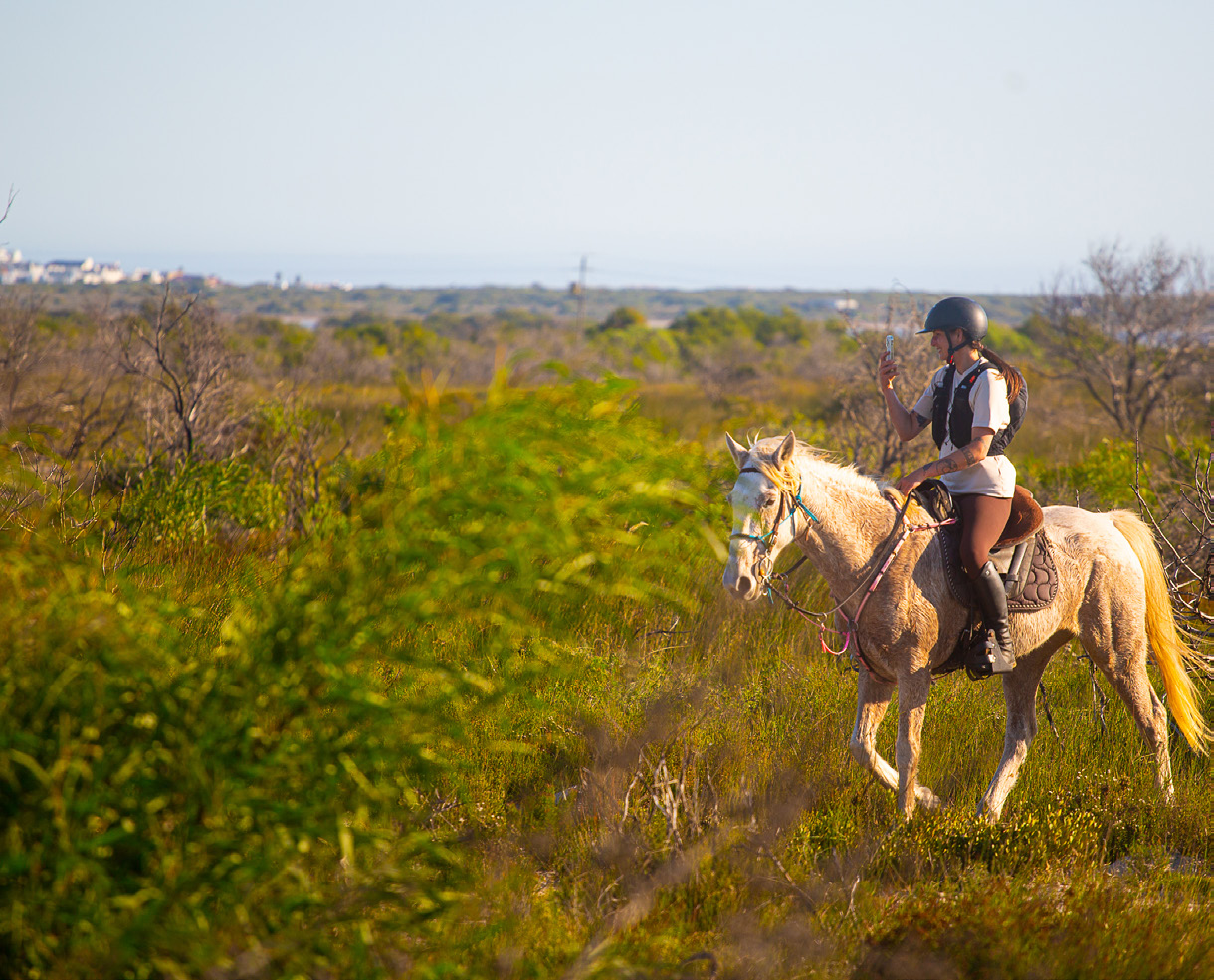
Sarah explains that experienced riders can explore the reserve itself, where buffalo also roam. Beginners and children can instead enjoy guided rides along Yzerfontein’s magnificent 16-Mile Beach, regarded as South Africa’s longest uninterrupted stretch of beach.
The reserve fills an unusual niche in the Western Cape.
“We’ll never have lions,” Sarah says. “A 1 700-hectare reserve simply isn’t large enough for them. But what we can offer is something different: an intimate safari experience with a maximum of only nine guests per vehicle. Families can even book the entire vehicle for a private game drive.”
Situated just over an hour from Cape Town, the reserve offers an authentic wildlife experience without the lengthy journey to one of South Africa’s traditional Big Five destinations.
It does not try to compete with the Kruger National Park or the large private reserves of the north. Instead, it offers something that belongs entirely to the West Coast: buffalo, giraffe, zebra and antelope moving through fynbos and strandveld, with the Atlantic Ocean just beyond the horizon.
Passionate guides such as Daniel ensure that each drive feels personal, informative and memorable. There is time to stop, to ask questions and to take in the details often missed when an experience is hurried.
Luxury rooted in the landscape
After our safari, we made our way to Caracal, the first completed luxury cabin in the Rooikat Safari Collection. The other cabin is the Porcupine.
A beautifully designed boardwalk leads through the fynbos towards the cabin. As the late-afternoon sun painted the horizon in warm shades of gold and crimson, I knew it was going to be a stay to remember. Two salt pans lie in front of the cabins, which is where the name The Salt Mine comes from. The cabins are known collectively as the Salt Mine Cabins but form part of the wider Rooikat Safari Collection.
According to Sarah, they were designed to reflect the history of the area while offering every modern comfort. Inspired by the old gypsum-mining camps that once stood near the salt pans, the architecture embraces warm timber finishes, natural textures and earthy shades that mirror the surrounding landscape.
Rather than creating something deliberately rustic, the designers blended the character of the historic mining cabins with contemporary luxury. Every detail has been carefully considered, from the handcrafted sliding doors and bespoke joinery to the stone basins, selected fittings and tactile natural materials. The result is a space that feels elegant and welcoming without becoming disconnected from its setting.
“The interiors were designed by Artichoke Interiors, led by Câline Williams-Wynn, whose portfolio includes luxury safari lodges across Africa. The architecture was undertaken by Black Sable Architects, whose contemporary design complements the reserve’s unique setting. The name The Salt Mine pays tribute to the series of historic salt pans on the property, where gypsum was once mined, preserving an important chapter of the area’s history while reimagining it for today’s travellers.”
Inside Caracal, every element has been selected to celebrate the West Coast and the work of local artisans.
Wherever possible, the team has chosen South African products. These include fynbos-inspired bathroom amenities, fragrant Darling Olives bath salts and handmade Darling Sweets placed in the cabin to welcome arriving guests.
The décor continues the story of the region.
Delicate botanical illustrations displayed in the bathrooms depict fynbos species found on the reserve. The collection was bought from Grootbos Private Nature Reserve. An accompanying coffee-table book invites guests to learn more about the remarkable plants and pollinators of the Cape.
In the lounge, a striking artwork by Stephen Townley Bassett recreates authentic West Coast rock art using traditional pigments and techniques. It offers a powerful connection to the region’s earliest inhabitants and adds another layer to the cabin’s sense of place.
“We try to tie in all the stories from the local area,” Sarah explains. That intention is evident throughout the space.
The cabin also contains a selection of fynbos-inspired cooking seasonings and herbal teas, as well as cook books in the cabin and recipes to use the herbs. Guests receive fynbos honey from the bee hives on the reserve as a gift.
Caracal has an expansive open-plan living area and self-catering kitchen. Large sliding doors open onto a generous stoep, allowing the interior and exterior spaces to flow naturally into each other.


The two bedrooms, positioned on opposite sides of the central living area, are identical in layout and finishes. This makes the cabin particularly suitable for two couples, a family or friends travelling together, as neither room feels like the lesser option.
Every detail speaks of comfort.
The beds are dressed in crisp linen and exceptionally soft duvets. Natural tones and warm textures create a calm atmosphere, while the wide windows keep the landscape constantly in view.
The bathroom is a destination in itself. A freestanding black bath overlooks the open plains, making it almost impossible to resist a long soak while watching the light change across the reserve.
“We want people to reconnect to each other. You can hear the frogs and you can hear the sea when the wind’s blowing the right way. And obviously birds and all those sounds that we forget about sometimes when we’re living in cities. So it’s just reconnecting people to nature and each other and slowing down,” says Sarah.
By the time we returned from our game drive, the wood-fired KolKol hot tub was already steaming.
We climbed in with a bottle of bubbly just as the sun disappeared below the horizon. Later, we climbed out to enjoy a leisurely braai before settling back into the warm water beneath a canopy of stars.


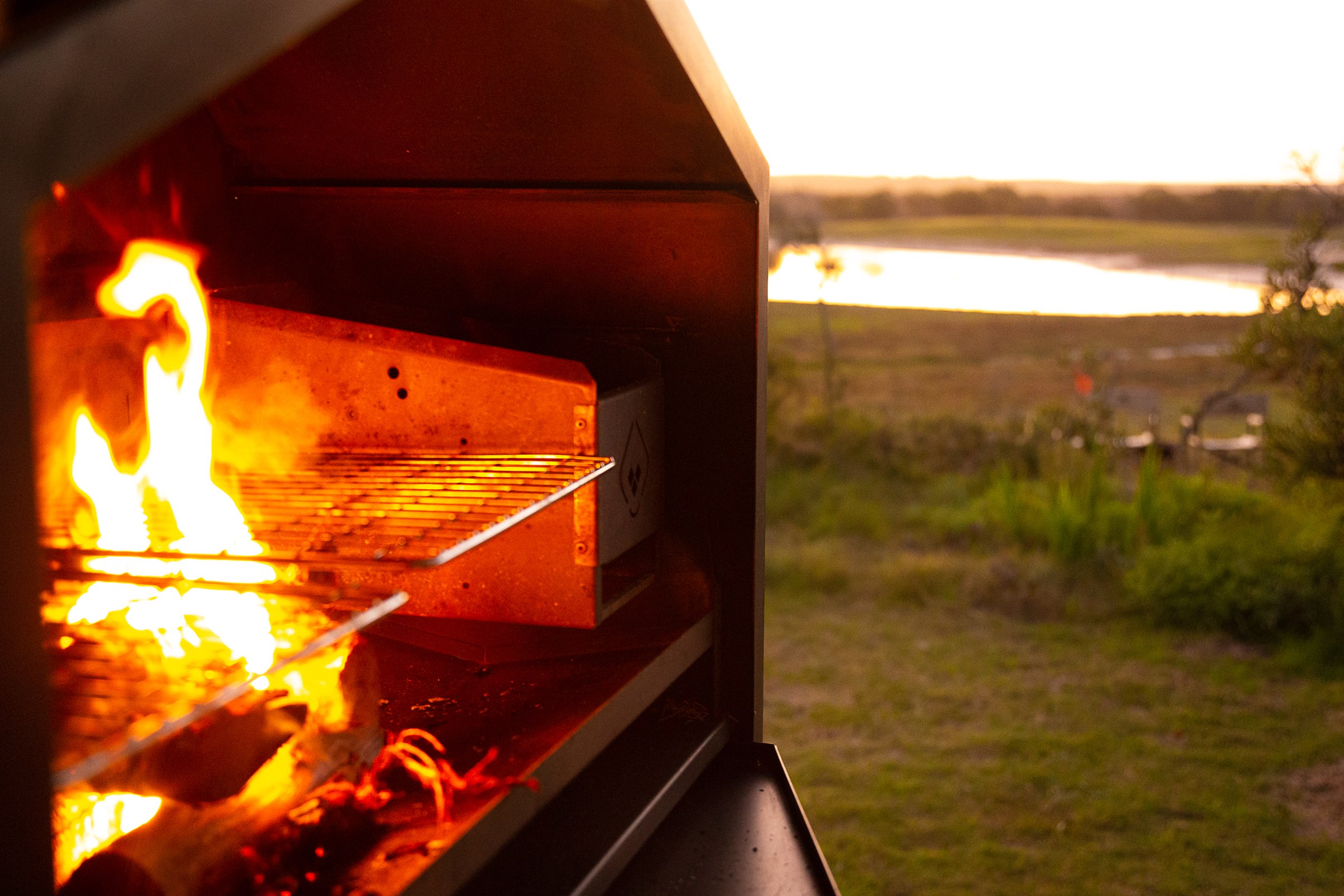
Conversation flowed easily, and the hours seemed to melt away. It was well after 01:00 when we finally decided to call it a night.
“Kids love the hot tub. And then obviously when the kids are in bed, then the adults can get their quiet time in the hot tub as well and catch up with each other,” says Sarah.
The accommodation appeals to a broad range of guests. Families are drawn to space and freedom, couples come in search of privacy and time in nature, and digital nomads can work remotely while surrounded by a landscape that feels far removed from city life.
Sarah says the game drives attract many international guests because the reserve is so easily accessible from Cape Town. The accommodation, however, has welcomed a combination of local and foreign visitors.
Travellers from Johannesburg are particularly interested in escaping into nature. While bush destinations are relatively accessible from Johannesburg, Cape Town residents do not have the same abundance of nearby game reserves. The West Coast Private Game Reserve meets that need by offering a genuine bush experience within easy reach of the city and the coast.
There are already plans for the reserve’s next chapter.
Sarah says the team would like to introduce hippos in future, although this would require approval from CapeNature.
“So we would like to get some hippo in with the right approval. We’re still going through all the paperwork to get the permits. It’s definitely in the pipeline, but we are waiting to get all the right approvals before that can go ahead, because approvals are more for ensuring the animals can live in a supportive environment. Additional cabins are also being considered, allowing more visitors to stay without losing the intimate character that makes the reserve distinctive.
For now, however, what I will remember most is the time spent with my mum. The older I get, the more I realise that these moments together are life’s greatest luxury.
Sharing a game drive. Drinking coffee beside a salt pan. Laughing around the braai. Sitting quietly in the hot tub beneath an endless West Coast sky. Watching a meteor streak through the darkness.
These are the memories I will carry with me long after the suitcases have been unpacked. The West Coast Private Game Reserve offers space to reconnect with nature, with ourselves and with the people who matter most. Sometimes, all it takes is one unforgettable night to remind you of what is truly important.
Visitor Information
The West Coast Private Game Reserve is perfectly positioned for exploring some of the region’s most memorable attractions, making it easy to combine a bush escape with coastal adventures.
From August to September, the reserve becomes part of the West Coast’s spectacular wildflower season, when carpets of indigenous flowers transform the surrounding landscape into a vibrant tapestry of colour.
Just a few minutes away, Weskus Padstal and neighbouring farm stalls offer a quintessential West Coast experience. Browse homemade preserves, freshly baked treats, local crafts and gifts before enjoying a leisurely breakfast or lunch. Families will appreciate the children’s play area, while adults can sample Wright’s Distillery at the on-site tasting room. The WCPGR’s booking office is located here and game visitors depart from there on the game drives.
The beaches of Yzerfontein are only a 10-minute drive away, making it easy to combine a morning game drive with an afternoon beside the Atlantic Ocean. The village also offers excellent restaurants, cafés and boutique shops.
Other nearby attractions include:
!Khwa ttu San Heritage Centre – Discover the fascinating history, culture and living heritage of the San people.
West Coast Fossil Park – Home to some of Africa’s most significant fossil discoveries.
Darling – Explore boutique shops, visit Evita se Perron, enjoy Darling Sweet and experience the town’s relaxed country charm.
Darling Brew – One of South Africa’s pioneering craft breweries, offering tastings and great food.
Game Drives
The reserve offers guided game drives for both overnight guests and day visitors. Important Note: No self-drives are allowed on the reserve.
Morning and afternoon departures are available at 09:00 and 14:00, with each safari lasting approximately 2½ to 3 hours. Drives take place in open nine-seater Land Rovers, accompanied by qualified guides, and include a memorable coffee or tea stop with homemade rusks and light snacks. Sundowner experiences are reserved exclusively for overnight guests.
Game drives depart from the Weskus Padstal, which offers safe parking and is easily accessible for visitors travelling from Cape Town or elsewhere along the West Coast.
Rates
Adults (12 years and older): R750
Children (3–11 years): R300
Private vehicle (maximum nine guests): R4 500
From 1 November the rates will increase to R825 for an adult and R330 for a child. Private vehicle will stay the same.
Please note: This is not a Big Five reserve. Instead, the experience focuses on authentic wildlife encounters, breathtaking scenery, expert guiding, photography and learning about the unique West Coast ecosystem.
Accommodation
The reserve’s luxury accommodation consists of the beautifully designed Salt Mine Cabins, part of the Rooikat Safari Collection.
To reach the accommodation, travel along the R27, turn onto the R315 towards Yzerfontein, then turn right at the West Coast Private Game Reserve sign approximately halfway to the village.
More Experiences
Visitors can easily extend their stay by combining the reserve with several nearby adventures.
Whale Watching (November to March)
Whale Expedition SA operates seasonal whale-watching trips from Yzerfontein Harbour, just 15 minutes away. The reserve also offers a popular three-night Whale and Safari package, combining marine wildlife with an unforgettable bush experience.
Dassen Island Boat Tours (Mid-October to May)
Cape Coast Expeditions offers boat trips to Dassen Island from Yzerfontein Harbour, creating another excellent combination with an overnight stay and game drive.
Horseback Safaris
Experience the reserve from a completely different perspective with West Coast Horse Trails.
Experienced riders can enjoy a two-hour horseback safari among giraffe, zebra and other plains game. Because buffalo roam freely on the reserve, riders must be confident at both canter and gallop. A three-hour option combines the reserve with the spectacular coastline, while beach rides are available for riders of varying experience levels.
Horseback safaris are operated by West Coast Horse Trails, based just outside the reserve.
Horse rides: R1 500 per person for the 3 hours safari and beach experience. R1250 for two hours. https://westcoasthorsetrails.co.za/; 076 251 8584; or contact Dominique at 082 463 3139. Prices are subject to change.
Behind the Design
The Salt Mine Cabins celebrate the heritage of the West Coast through thoughtful architecture and carefully curated interiors.
The cabins were designed by Black Sable Architects, with interiors by Artichoke Interior Design, blending the history of the area’s gypsum salt-mining camps with contemporary luxury. Botanical artwork throughout the cabins is inspired by the internationally acclaimed Grootbos Florilegium, while the lounge features a striking artwork by Stephen Townley Bassett, recreating authentic Southern African rock art using traditional pigments and techniques.
Contact
West Coast Private Game Reserve
Tel: 066 525 1994
Bookings:
bookings@westcoastsafaris.co.za for game drives & bookings@rooikatsafari.com for accommodation.